
The Ghost in the Machine: How I learned to stop worrying and love the AI
Why We Must Stop Treating AI as a Replacement and Start Treating it as a Coworker

History has a funny way of repeating. It tells us don’t do this. If you do this you will suffer. But like kids in a school or like teenagers rebelling we say, I will do this. This time it will be different. Well guess what, it’s not going to be different.
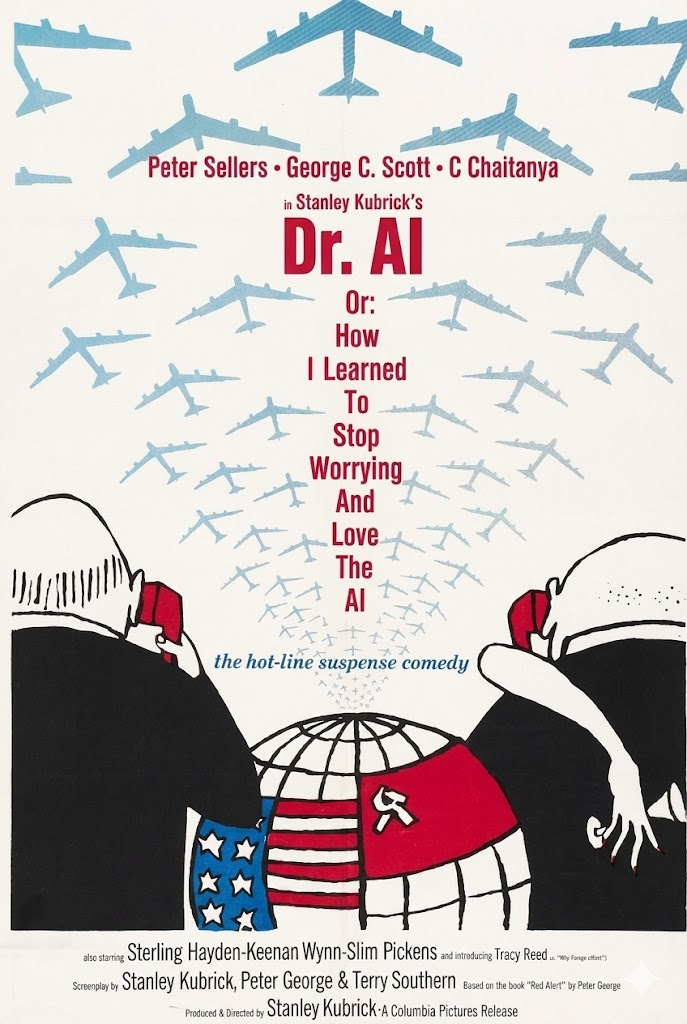
Today, we stand at the precipice of the Artificial Intelligence age. The tools available to the average employee right now are nothing short of revolutionary. Yet, a strange paralysis has taken hold. Many organisations and individuals are hesitating, eyeing these tools with suspicion rather than curiosity. And with good reason. People like Sam Altman and Satya Nadella have not helped the cause by pushing AI in places its not needed and hyping it up to the levels of AGI :)
But this hesitation feels eerily familiar, especially when viewed through the lens of India’s economic history. If we are to thrive in this new era, we must confront the uncomfortable truth: the mistake of resisting technological change is one we have made before, and it is one we cannot afford to make again.
Lessons from the Industrial Past
India’s relationship with the Industrial Revolution in the 18th and 19th centuries was complicated, to say the least. While colonial rule actively deindustrialized the nation to serve British interests, there was also significant internal cultural and philosophical resistance to mechanization.
Consider the textile industry. While Britain embraced the power loom and the steam engine, India’s legendary artisanal weaving sector struggled to adapt. There was a deep-seated wariness of machines that threatened traditional livelihoods and social structures. The Charkha (spinning wheel) became a powerful symbol of resistance and self-reliance during the freedom struggle, but in the post-independence economic landscape, a lingering suspicion of rapid, large-scale mechanization contributed to decades of sluggish industrial growth.
We missed the bus because we failed to understand one basic concept:
The machine replaced the muscle.
We tried to glorify the human using his muscles to achieve perfection. While that works for niche products, it cannot survive industrial scale. In fact, even now we glorify the man over the machine as a recent movie shows.

We missed the first bus. We spent decades playing catch-up, protecting obsolete methods instead of innovating. It wasn’t until the economic liberalization of 1991 and the subsequent IT boom that India truly demonstrated its potential to not just adopt, but dominate, a technological wave.
We proved we could adapt. But are we forgetting that lesson now?
The Current AI Paralysis
Fast-forward to 2024. The “steam engines” of our time are Large Language Models (LLMs) and generative AI. The access is unprecedented. For a small subscription fee, or often for free, an employee has access to an intelligence that knows almost every coding language, has read the entire internet, and can draft a strategy document in seconds.
Yet, adoption is lagging behind access.
A significant disconnect exists. While company leaders are rushing to “implement AI,” the workers on the ground are often stalled.
As I have been observing in Ozonetel, the AI “native” employees in the organization are minuscule. I would say there are 3, maybe 4 employees who are using AI properly. The rest are going through the motions though the management is completely convinced on the switch to AI.
The Evidence and the “Copilot” Conundrum
We see this evidenced in the rollout of major enterprise tools. Take Microsoft Copilot, for instance. Microsoft has aggressively integrated AI into its ubiquitous Office suite. On paper, it’s a productivity dream. In reality, the reception has been disastrous.
Reports and user feedback indicate that for many, Copilot hasn’t been the instant magic bullet promised. Why? Part of the blame lies with the tech giants’ approach, shoving features at users without adequate training on how to integrate them into complex workflows. It can feel clunky, sometimes hallucinates, and requires a new way of interacting with software (prompt engineering).
But a larger part of the problem is user resistance. Many employees are not actively trying to bridge that gap. They try it once, it fails to perfectly execute a complex task, and they dismiss it. Frankly, they don’t care.
The fundamental problem is that for an employee, they wanna come in, do their job(which was mostly looking at a screen, move bits here and there) and go home to their life. Now AI means they have to learn something new. They will resist this change.
According to various 2023-2024 reports on the “AI divide,” while global awareness of GenAI is near universal among knowledge workers, regular, highly effective utilization is vastly lower. A Salesforce survey indicated that while many executives are keen, a significant percentage of workers lack the training or the mandate to use these tools effectively. They are ignoring the supercomputer sitting on their desktop.
The Root Error: Replacement vs. Augmentation
Why the hesitation? It boils down to fear, rooted in a fundamental misunderstanding of what this technology is.
Too many people are looking at AI through the lens of Replacement Technology. They see a tool that can write, code, and design, and they immediately jump to: “This thing is here to take my job.” When you view something as your executioner, you will not cooperate with it. You will resist it, hide from it, and hope it goes away.
This is the wrong framing. We need an urgent mindset shift toward seeing AI as Augmentation Technology.
If you are spending four hours a day summarizing endless PDF reports, writing generic outreach emails, or debugging basic code, you are wasting your human potential. AI can do those tasks in minutes. By resisting AI, you aren’t protecting your job; you are insisting on doing drudgery that a machine is better suited for.
It’s like in the movie above, we have a grinding machine. But if you choose to grind by hand for some unseen uptick in taste, who are you doing it for? For yourself, or for the hungry man who needs some idli as breakfast which he can gobble down quickly before going to work.
AI is not here to replace the employee. It is here to help them. As I told above, why should the employee care? They will care if their work becomes better or easier. They know they have to sit in a cubicle from 9-5. How can AI make that time better. The companies which will solve this will make bank.(My brother’s stealth startup is working on exactly this).
The New Paradigm: AI as Your Coworker
To survive this transition, employees need to stop treating AI as a suspicious piece of software and start treating it as a junior coworker.
A very smart, very fast, sometimes naive junior coworker who needs clear instructions.
When you shift to this mindset, the fear evaporates, replaced by utility. The AI handles the “blank page problem,” the data crunching, and the repetitive drafts, freeing you up for higher-level strategic thinking, creative problem solving, and emotional intelligence, things AI is terrible at.
Conclusion: Adapt or Perish
The industrial revolution proved a harsh reality: history does not kindly judge those who refuse to adapt to technological paradigm shifts. The difference today is speed. The industrial revolution unfolded over a century; the AI revolution is unfolding over months.
The historical wariness of change that once held India back cannot be allowed to resurface. The tools are here. They are accessible. The teams and individuals who cling to the old ways of working out of fear or inertia will find themselves obsolete.
Those who embrace AI not as a replacement, but as the ultimate augmentation tool won’t just survive the coming changes. They will define them.